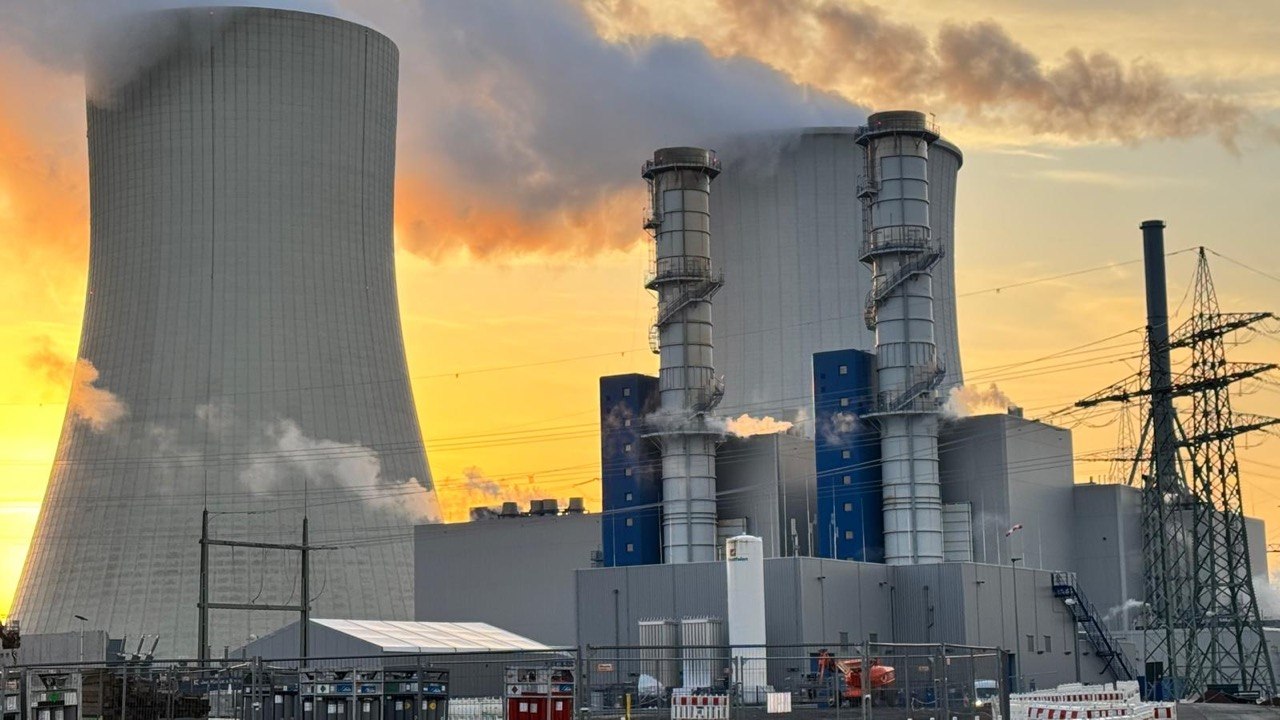
Green Hydrogen at Industrial Scale
The GET H2 Nukleus project is one of Germany's pioneering large-scale green hydrogen production facilities, developed in partnership between Linde GmbH and RWE. The plant uses PEM (Proton Exchange Membrane) electrolysis technology to produce hydrogen from demineralized water using renewable electricity.
Logxom Engineering contributes expertise across two critical engineering scopes: the full process automation and control system (DCS/PLC) for the electrolysis plant, and the station control technology (SLT) for the power distribution infrastructure that feeds and protects the entire facility.
Two Complementary Disciplines
Process Automation (DCS/PLC)
PEM Electrolysis Plant Control
- 10 electrolysis modules with 5 TSA stacks each — state-machine controlled
- H2 conditioning system: moisture separation, O2 adsorption, drying
- H2 compression and product delivery at battery limit
- Cooling water, purge air, instrument air supply systems
- Integrated SIS/ESD with 10 emergency shutdown buttons
- Hierarchical state-machine architecture: 8 states, full start/stop sequencing
- PRDT (Pressure Ramp & Decay Test) every 72 hours
Power Infrastructure (ST1049)
Station Control Technology (SLT)
- 8 medium-voltage stations (20kV) with full SLT monitoring and control
- 16 cast-resin transformers 1,600 kVA (20kV/0.4kV)
- 2 × 2.5 MW emergency generators (NEA) with automated switchover
- Battery storage system integration (1,000 kVA transformer)
- PV plant management and load balancing
- WebClient remote access for facility management
Hierarchical Automation Design
The plant follows a top-down control architecture where the main plant controller (Logic 1000) orchestrates all subsystems. Each subsystem is an encapsulated state machine with standardized interfaces, enabling high automation levels and clear fault diagnostics.
Main Plant Controller (L-1000)
Top-level state machine with 8 states: Off, Ready, Starting, Running, Pause (Hot/Warm/Cold), Shutdown. Coordinates all subsystems via standardized START/STOP/ENABLE interfaces.
Load Management (L-1000.SA05)
Automated load control starts/stops modules based on target plant load (3–100%). Runtime balancing ensures equal wear across all 10 modules. Load steps: 0%, 30%, 60%, 100%.
Safety System (SIS/ESD)
Independent safety layer with 10 hardwired emergency stops, gas detection integration (MSA), and automated plant depressurization sequence. SIL-classified safety functions per IEC 61511.
Electrolysis Modules (L-3000 × 10)
Each module runs 5 TSA stacks with individual process water circulation, H2/O2 separation, and pressure control. Modules can be independently started, stopped, or held in standby.
H2 Conditioning (L-4000)
Water separation, residual O2 adsorption, drying stages. Automated pressure and output control via cascade regulators. Product quality monitoring at battery limit.
Power Infrastructure (ST1049)
SLT system monitors and controls all 8 MV stations, NEA generators, battery storage and PV integration. BacNet/Modbus communication, WebClient remote access for facility managers.